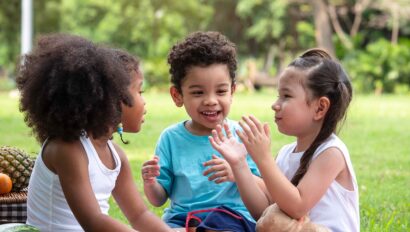
10 Simple Ways to Support Learning Through Play at Home
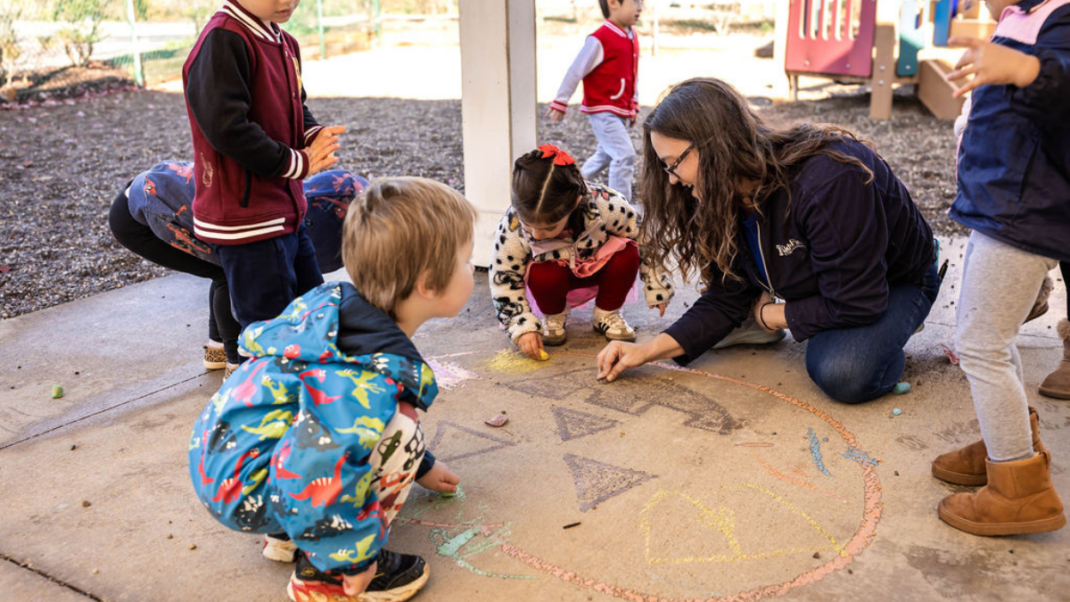
Quick Answer
Learning through play is one of the most powerful ways young children build confidence, creativity, and problem solving skills. The everyday moments you already share with your child, building together, exploring outside, reading stories, and getting messy with art, are laying the foundation for lifelong learning. Here are 10 simple ways to keep that going at home.
Some of the most meaningful learning happens during the simplest moments, like building a block tower together, pretending to run a restaurant, or splashing in a puddle after the rain. Families in Antioch, IL, Lindenhurst, IL, McHenry, IL, Volo, IL and nearby communities choose A Child’s Place because they see how play sparks curiosity, builds confidence, and helps children make sense of the world. Here are 10 easy, everyday ways to keep that magic going right at home.
Why Play Is the Best Kind of Learning
If you have ever watched your child completely absorbed in a game they invented, you have already seen learning through play in action. That deep focus, that joy, that determination to try one more time when something wobbles or falls? That is what real learning looks like.
Play is how young children develop critical thinking, language, creativity, and social skills. It is not separate from learning. It is learning at its best. And here is something wonderful: you are already doing so much of this. Every time you play alongside your child, talk about what they are building, or follow along on an imaginary adventure, you are helping their brain grow.
10 Simple Ways to Bring Play Based Learning Home
1. Let Them Lead the Play
When your child decides what to play and how to play it, they are practicing decision making, creativity, and problem solving all at once. Follow their lead and see where it goes. If they want to build a zoo out of couch cushions, grab a stuffed animal and ask for a tour. The best play ideas usually come straight from them.
2. Turn Everyday Moments Into Mini Adventures
Cooking dinner? Let them measure, pour, and stir. Folding laundry? Invite them to sort by color or size. A trip to the grocery store becomes a treasure hunt for fruits that start with the letter B. Once you start looking for learning together, it shows up everywhere.
3. Get Messy (It Is So Worth It)
Finger painting, mud kitchens, water play, and sensory bins are incredible for developing fine motor skills and sparking creativity. Those squishy, colorful, splashy moments are building hand strength, coordination, and confidence all at the same time. Lay down an old sheet and let them go for it. The mess cleans up, but the learning sticks.
4. Read Together, Then Play the Story
After reading a favorite book, invite your child to act it out, draw a scene, or make up what happens next. This deepens comprehension, fires up imagination, and makes stories feel alive. You might be surprised how one simple picture book turns into a whole afternoon of creative play.
5. Build, Stack, and Create
Blocks, boxes, blankets, and recycled materials are some of the most powerful learning tools a child can have. Building and constructing help children understand spatial relationships, balance, and cause and effect. And there is nothing quite like the proud face of a child who just built the tallest tower in the house.
6. Encourage Pretend Play
When children pretend, they are doing some seriously impressive thinking. They are creating stories, negotiating roles with friends or siblings, practicing empathy, and experimenting with language. A cardboard box can become a spaceship, a castle, or a pizza shop. Their imagination does all the heavy lifting.
7. Explore Nature Together
Take a walk and notice what is blooming, what bugs are crawling, and what the clouds look like today. Collect leaves, rocks, or sticks and sort them by size, shape, or color. Nature is a never ending, always changing classroom, and children are naturally drawn to every part of it.
8. Sing, Dance, and Make Music
Music is one of the most joyful ways to learn. Singing songs, clapping rhythms, and dancing together help children develop language, memory, coordination, and self expression. Make up silly songs about getting dressed. Have a living room dance party. Every giggle counts.
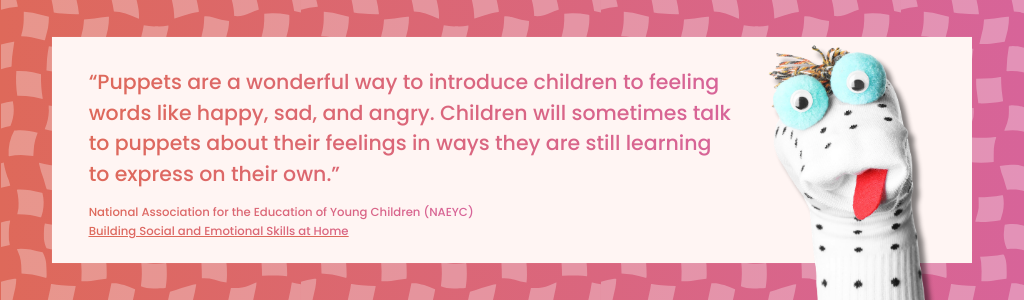
9. Use Puppets and Storytelling to Talk About Feelings
Sometimes the biggest lessons happen during the quietest play. A sock puppet, a stuffed animal, or even a paper bag character can open up conversations about emotions that children are still learning to name. Ask the puppet how it is feeling today and watch your child’s empathy and language bloom. It is one of those simple ideas that works beautifully.
10. Just Be Present
This might be the simplest and most powerful tip of all. Sit on the floor and just be with your child while they play. Your presence, your attention, and your genuine interest are what make the moment meaningful. When children feel safe and seen, they explore more, take bigger creative risks, and grow in ways that will amaze you.
Frequently Asked Questions
What kinds of toys work best for play based learning?
Open ended toys are the real stars here. Think blocks, art supplies, dress up clothes, sand, water, cardboard boxes, and anything your child can use in more than one way. The simpler the material, the more room there is for creativity and imagination.
How much time should my child spend in free play each day?
Even 20 to 30 minutes of child-led play every day makes a real difference. It gives children space to explore, create, and build skills at their own pace. And on days when you have more time, let it run as long as the fun lasts.
What if my child just wants to do the same thing over and over?
That is actually a wonderful sign! Repetition is how young children master new skills and build confidence. When your child plays the same game again and again, they are deepening their understanding and gaining control over something that feels exciting and important to them.
How can I tell if play is really helping my child learn?
Look for the little moments: your child using new words during pretend play, solving a building challenge on their own, sharing or negotiating with a sibling, or asking big “why” questions. Those are all signs of real learning in action. If you are seeing curiosity, focus, and joy, play is doing exactly what it should.
Come See Learning Through Play in Action
At A Child’s Place, play is at the heart of everything we do. Our teachers create warm, joyful classrooms where children explore, create, and grow every single day. Families from Antioch, IL, Lindenhurst, IL, McHenry, IL, Volo, IL and nearby communities are welcome to come see it for themselves.
Schedule a tour at A Child’s Place and discover how your child can thrive in a place that feels like family, right here in your neighborhood.
Related Posts
All Posts
Hands-On Cooking: How Parents in Illinois Can Teach Healthy Habits to Toddlers